White Dove is Benjamin Moore's most-specified off-white, and in professional interior design circles it has achieved near-universal status. It's the default when a designer wants a warm white that isn't aggressively warm — a color that softens pure white by a single controlled degree without tipping into cream. At LRV 83 it maintains the brightness of a true white, and its slightly green-gray undertone prevents the yellow shift that plagues many warm whites in natural light. White Dove is simultaneously the safest and the most elegant warm white in wide use.
Undertones and Lighting Behavior
White Dove's undertone is best described as warm with a faint green-gray cooling influence — enough warmth to feel inviting, enough gray to prevent it from reading obviously yellow. Under cool north light it holds its warmth and resists the drab shift that affects pure whites in cold light. Under warm incandescent and 2700K LED, White Dove deepens gracefully without becoming yellow. In full south-facing afternoon sun, the color brightens and can briefly appear slightly cooler — an occasional complaint, but one that disappears once evening light takes over. Of the major warm off-whites, White Dove is the most chameleon-resistant.
Where to Use White Dove in the Home
White Doveperforms differently across rooms. Here’s how it reads in the spaces where it’s most often specified.
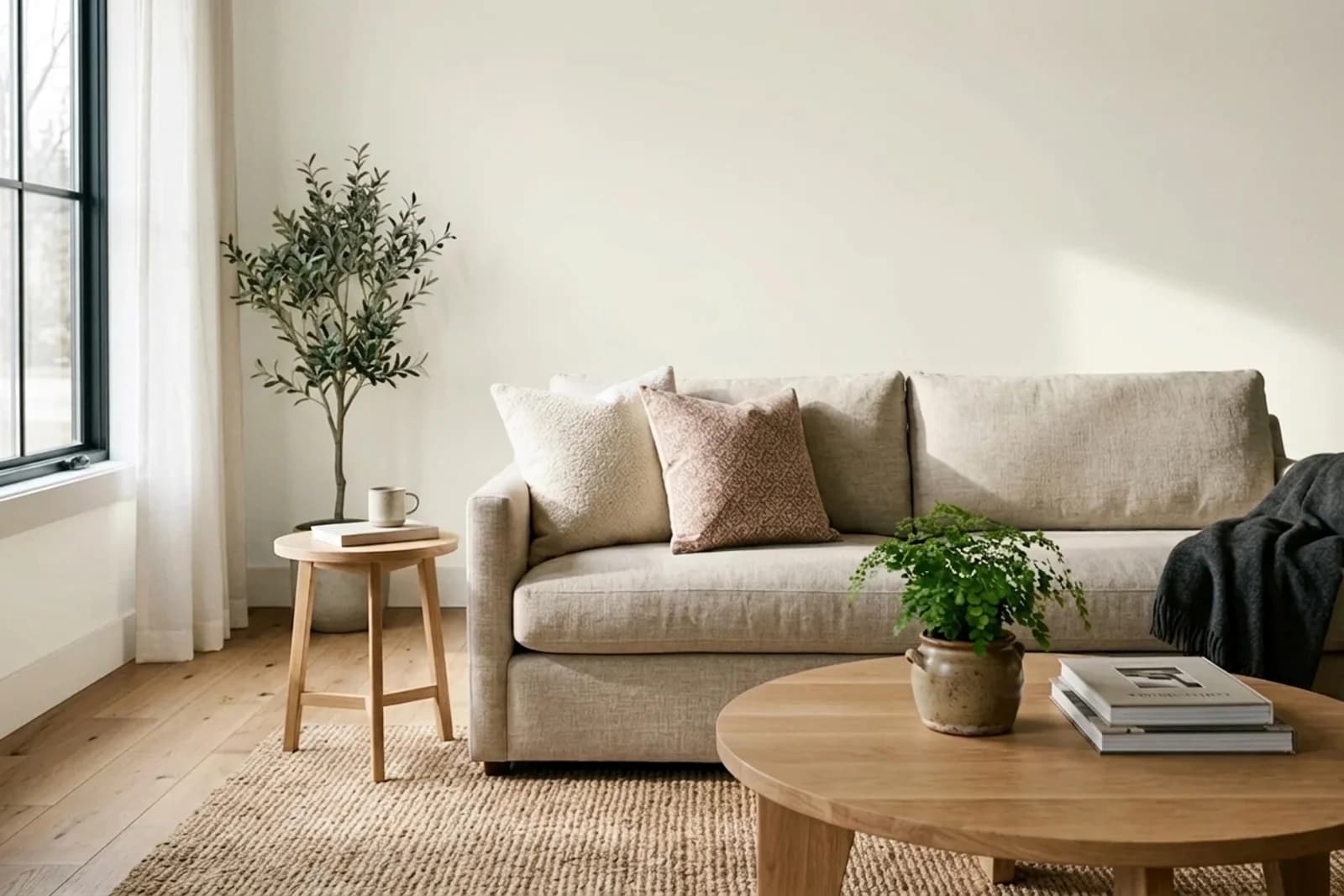
AI-assisted visualization. Wall color digitally matched to Benjamin Moore White Dove (OC-17).
Living Room
White Dove is the default designer choice for a living room that needs to flatter both cool and warm décor. Its balanced warmth pairs equally well with white-oak floors and cooler walnut, and the green-gray undertone keeps it from competing with soft green or blue accents. Specify it in eggshell on walls with semi-gloss on trim for a subtle sheen shift that highlights architectural detail.
More living roompaint colors →AI-assisted visualization. Wall color digitally matched to Benjamin Moore White Dove (OC-17).
Bedroom
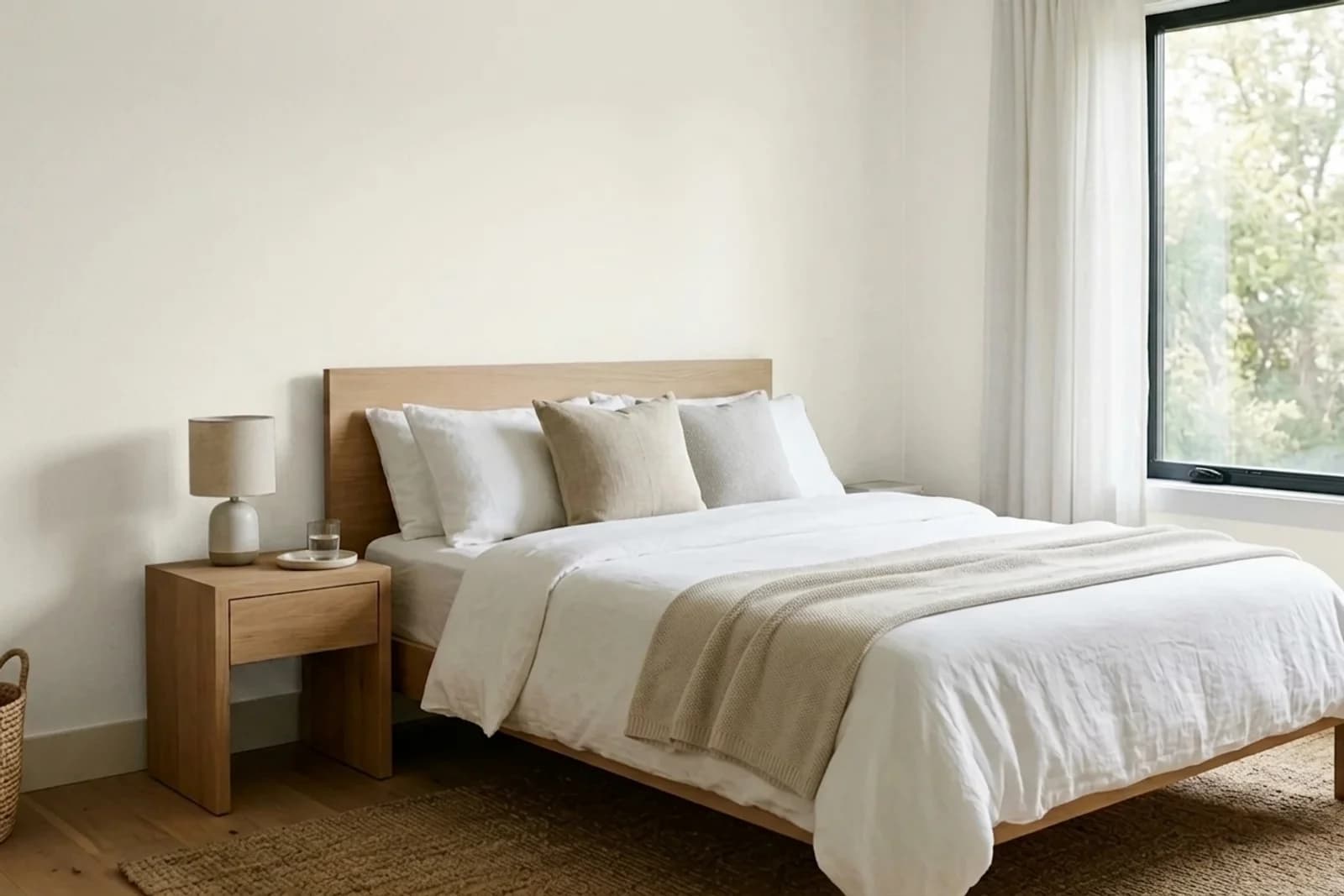
In bedrooms, White Dove delivers a restful, barely-warm white that flatters both sunny morning rooms and cooler evening spaces. It pairs especially well with unbleached linens, natural wood furniture, and warm brass hardware. Use it throughout the bedroom envelope — walls, ceiling, trim — for the seamless, airy effect designers favor in primary bedrooms.
More bedroompaint colors →AI-assisted visualization. Wall color digitally matched to Benjamin Moore White Dove (OC-17).
Kitchen
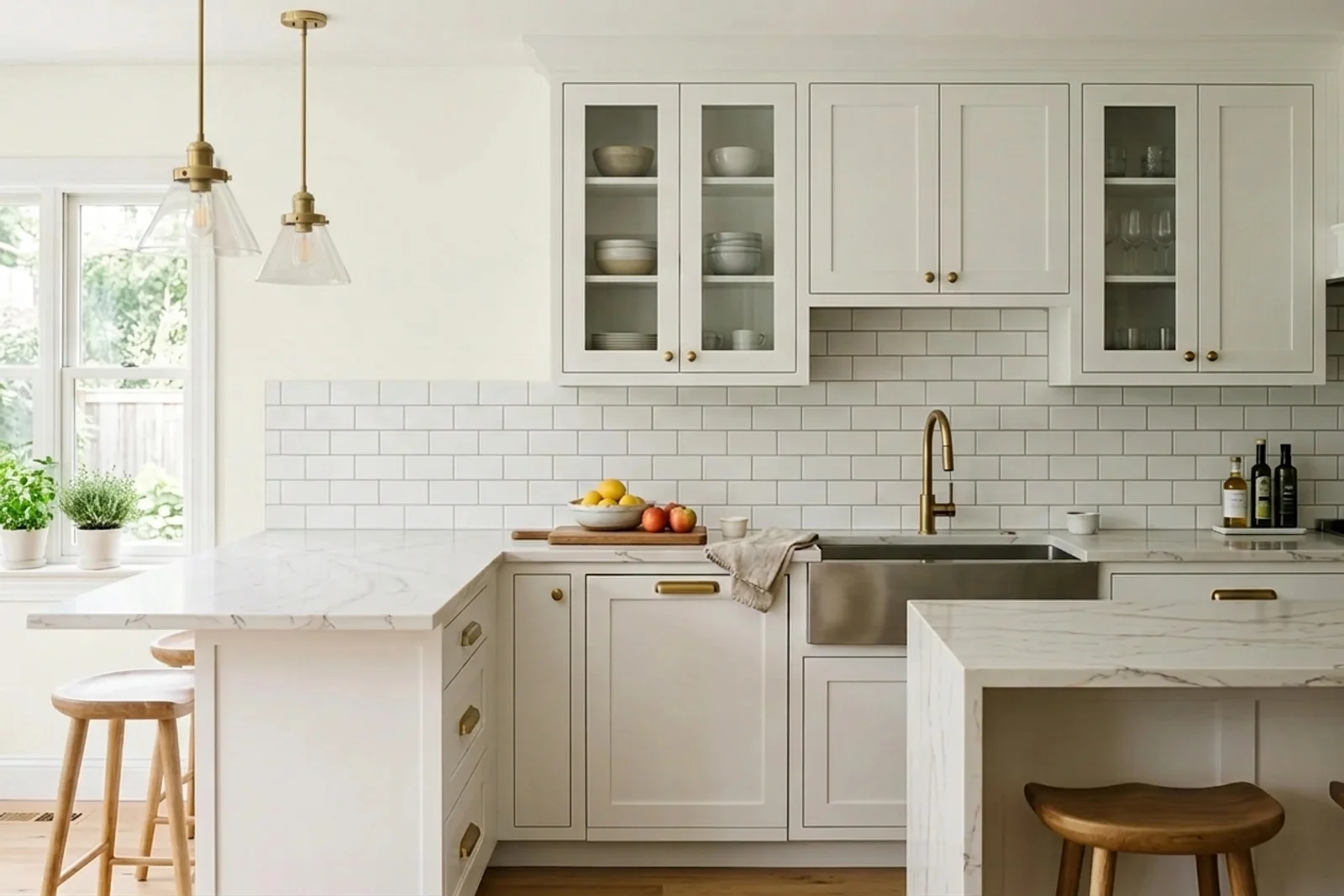
White Dove is the most-specified cabinet color in the professional design community, full stop. On cabinet doors it produces a creamy, timeless look that avoids both the clinical edge of pure whites and the dated yellow of a warm cream. It pairs with every common countertop material, including white quartz, calacatta marble, soapstone, and butcher block.
More kitchenpaint colors →AI-assisted visualization. Wall color digitally matched to Benjamin Moore White Dove (OC-17).
Bathroom
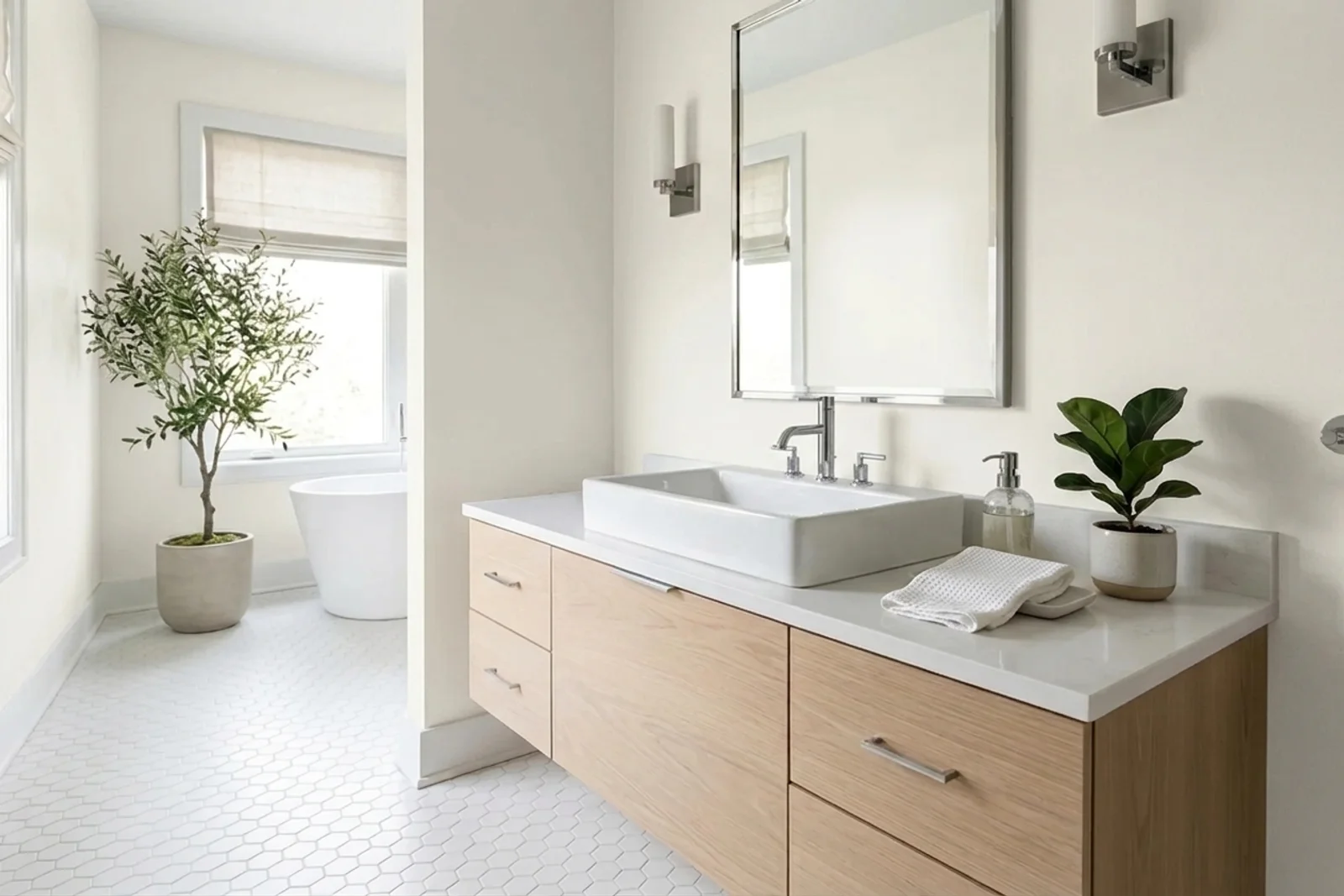
White Dove in a bathroom delivers the spa warmth without the yellowing that affects many creamy whites under warm bath lighting. It holds its character well against white tile and marble, and its faint green-gray undertone coordinates with both chrome and brass fixtures. For a primary bathroom, consider painting the vanity in White Dove as well for a monochrome envelope.
More bathroompaint colors →AI-assisted visualization. Wall color digitally matched to Benjamin Moore White Dove (OC-17).
Dining Room
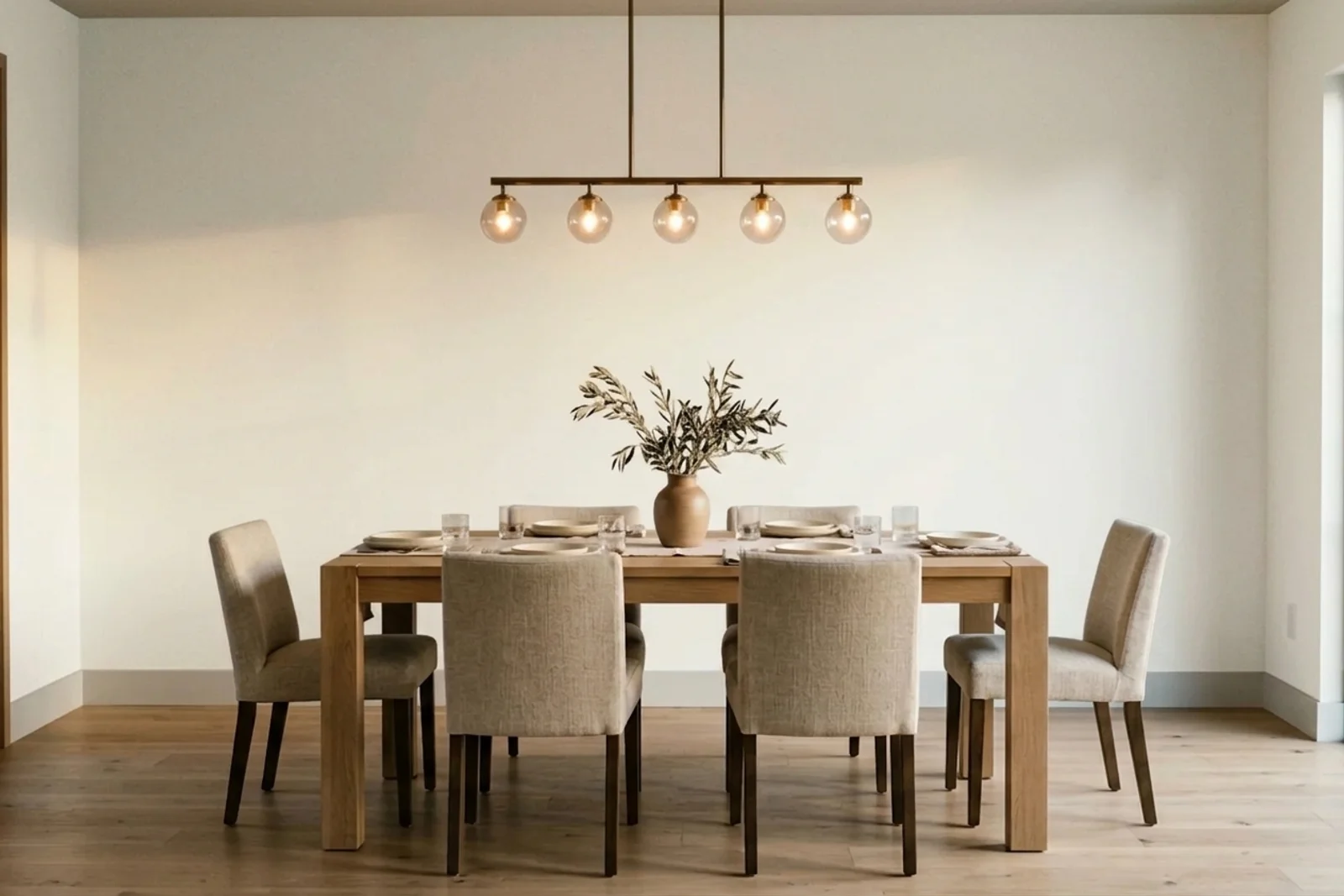
White Dove in a dining room creates the gallery-warm atmosphere that flatters candlelight, food, and skin. It pairs beautifully with deep stained wood dining tables and deeper accent walls (Hale Navy, Essex Green). Its high LRV keeps the room feeling airy even when used as the entire room's color.
Natural white oak lower cabinets with White Dove upper
Hale Navy island with White Dove perimeter
Material and Finish Pairings
White oak and rift-sawn oak flooring
Calacatta or Carrara marble
Unlacquered brass, aged brass, or antique bronze hardware
Linen, wool, and warm neutral textiles
White Dove Compared to Similar Colors
White Dove is the balanced middle of Benjamin Moore's off-white library. Compared to Simply White (OC-117, LRV 89), White Dove is noticeably softer, warmer, and less reflective — Simply White reads as a clean modern white, White Dove as a vintage warm white. Against Chantilly Lace (OC-65, LRV 90), White Dove is much warmer and considerably softer in tone; Chantilly Lace is the brighter, cooler, more contemporary pick. Cross-brand, White Dove is closest to Sherwin-Williams Alabaster (SW 7008, LRV 82); White Dove has a greener-gray undertone while Alabaster leans more yellow-beige, though the two often substitute cleanly for each other in the same palette.
White Dove (OC-17) has an LRV of 83, which places it in the warm off-white category — bright enough to function as a white on walls and trim, but warm enough to read as softened rather than stark. It reflects a significant amount of light, which is why it performs well even in low-natural-light rooms.
Is White Dove warm or cool?
White Dove is a warm off-white, but its warmth is balanced by a faint green-gray undertone that prevents it from reading yellow. This is what makes it different from creamier warm whites — the gray-green touch keeps White Dove feeling crisp even under warm artificial light.
Is White Dove good for kitchen cabinets?
Yes — White Dove is among the most-specified cabinet paint colors in professional design. It produces a creamy, classic cabinet look that reads clean rather than yellow, pairs with virtually every countertop material, and ages gracefully over the cabinet's lifespan. Use a cabinet-rated paint like Benjamin Moore Advance for durability.
What trim color pairs best with White Dove walls?
If you want trim to stand out from White Dove walls, Chantilly Lace (OC-65) or Simply White (OC-117) both deliver enough contrast to read as a distinct trim color while remaining in the white family. For a more subtle tone-on-tone effect, use White Dove on both walls and trim with a sheen shift — eggshell walls and semi-gloss trim.
Does White Dove look yellow?
Rarely. The green-gray undertone in White Dove prevents the yellow shift that affects most warm whites under warm light. In a room lit only by 2200K incandescent bulbs, White Dove can take on a subtle cream note, but under most residential lighting conditions it reads consistently as a warm soft white rather than a cream or yellow.
Design Tip
When painting kitchen cabinets in White Dove, commit to a cabinet-grade alkyd or waterborne-alkyd paint (Benjamin Moore Advance or Sherwin-Williams Emerald Urethane) and invest in proper prep — degrease, sand, prime, and use a brush/roll technique or HVLP sprayer. White Dove looks beautiful only when applied correctly; on poorly prepped cabinets it will chip at contact points within 12 months and show brush marks permanently.
White Dove Mood and Style in the Home
The moods White Dove most often produces, and the interior design styles it fits most naturally.
Moods
AiryCozySophisticated
Interior Design Styles
TraditionalFarmhouseTransitional
Final Thought on White Dove
White Dove's near-permanent position in every major designer's go-to list reflects a simple virtue: it gets the warm white right more reliably than almost any alternative. If you need a warm off-white that pairs universally, reads as intentional rather than default, and holds up under both daylight and artificial light, White Dove remains the safest elegant choice — and on kitchen cabinets, it's close to the industry standard. Sample it against your fixed finishes, commit to the right finish for the surface, and it will age with your house.