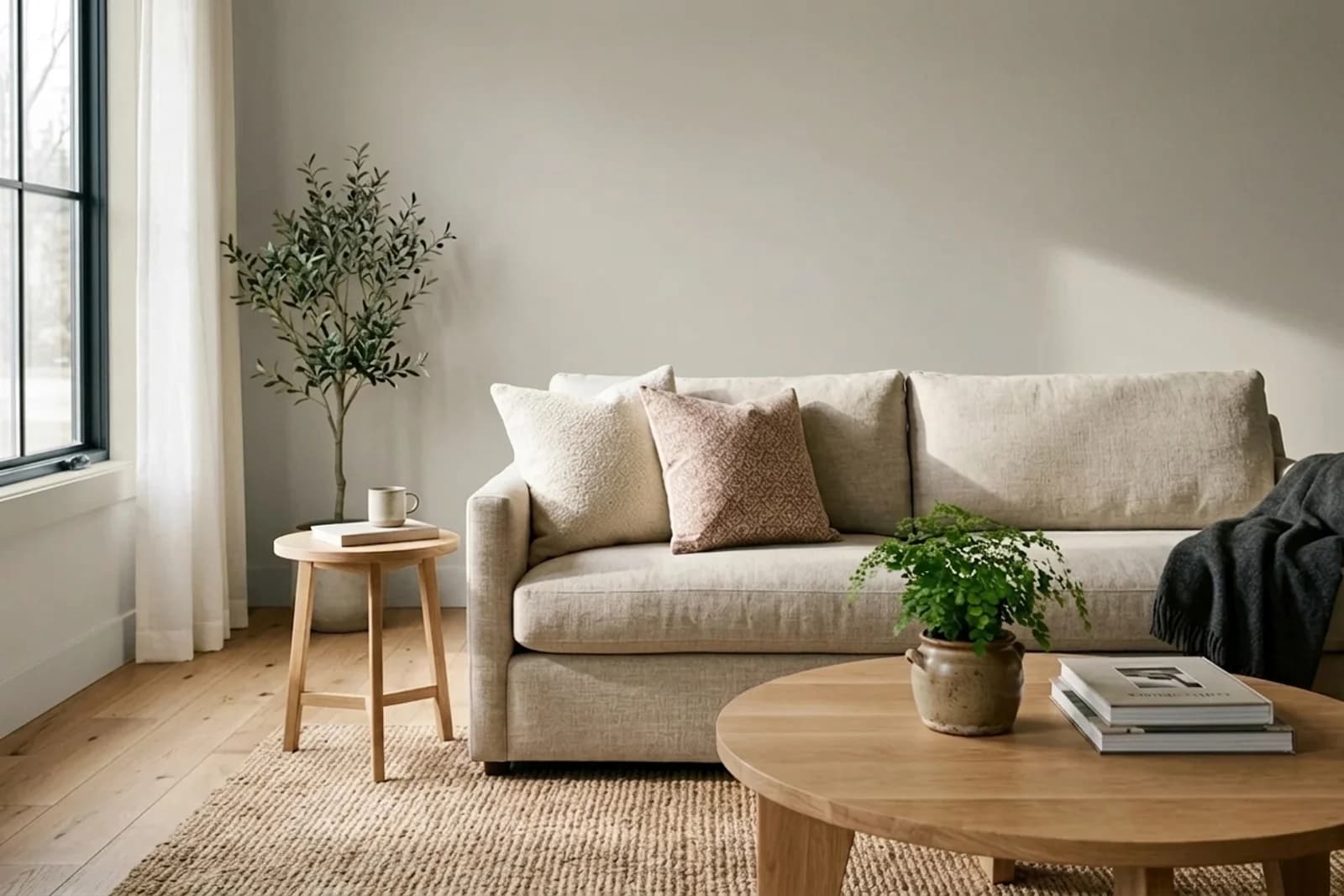
Revere Pewter is the warm gray that defined a decade of American interiors. Part of Benjamin Moore's Historical Collection, it is a true greige with a distinct taupe undertone — warmer than Repose Gray, cooler than Accessible Beige, and carrying a slightly deeper, more committed character than either. With an LRV of 55, Revere Pewter sits at the darker end of the mid-neutral range, giving rooms a grounded, sophisticated envelope that still reads bright enough for whole-room use. It's the color you reach for when you want a neutral with more presence than a standard pale greige.
Undertones and Lighting Behavior
Revere Pewter's undertone is the most distinctly taupe of the major warm grays — a soft brown-gray that reads warm without tipping yellow, and that holds its character more reliably across lighting conditions than most of its peers. Under north-facing cool daylight the color softens slightly but retains its warm-taupe signature; unlike Repose Gray, it doesn't swing toward mauve or lavender. Under warm LED and incandescent light, Revere Pewter deepens into a richer mushroom tone that flatters wood furniture and warm textiles. In south-facing strong sun the color brightens without losing its depth. Its lighting stability is one reason it has held up on professional specification lists for more than a decade.
Where to Use Revere Pewter in the Home
Revere Pewterperforms differently across rooms. Here’s how it reads in the spaces where it’s most often specified.
AI-assisted visualization. Wall color digitally matched to Benjamin Moore Revere Pewter (HC-172).
Living Room
Revere Pewter in a living room delivers a grounded, sophisticated backdrop that reads more committed than a pale neutral. Its taupe warmth flatters walnut, cherry, and cool oak floors equally, and it's particularly effective as a whole-envelope color (walls, trim, and ceiling in the same or tone-on-tone whites) for an enveloping, design-forward effect. Pair with layered neutrals and warm metal accents.
More living roompaint colors →AI-assisted visualization. Wall color digitally matched to Benjamin Moore Revere Pewter (HC-172).
Bedroom
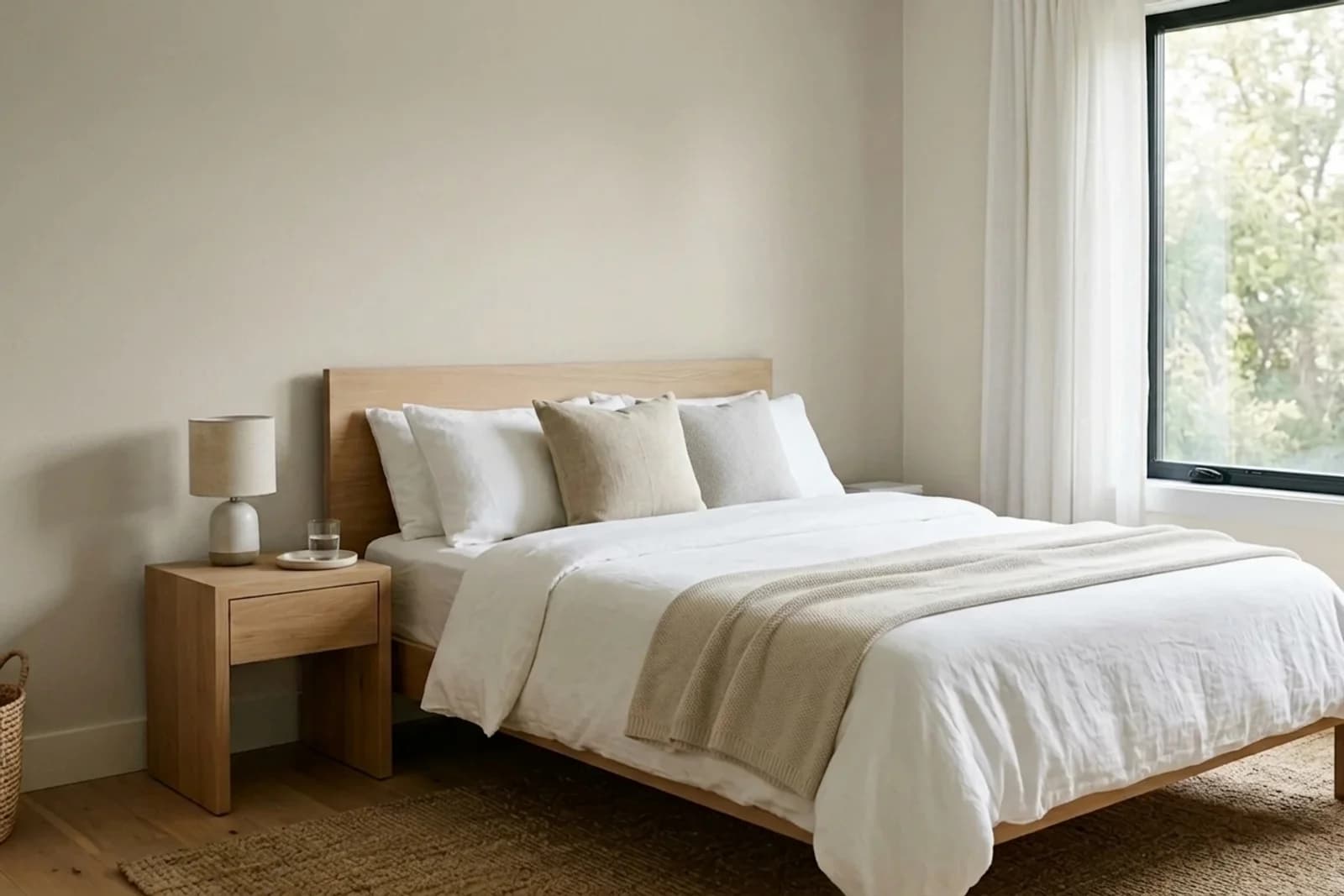
Revere Pewter in a bedroom produces a cocooning, slightly darker mid-tone that still reads as a neutral rather than a committed color. It's an excellent choice for primary bedrooms where the goal is rest and retreat. Pair with soft cream linens, unbleached cotton, and warm wood furniture for a layered, residential feel.
More bedroompaint colors →AI-assisted visualization. Wall color digitally matched to Benjamin Moore Revere Pewter (HC-172).
Kitchen
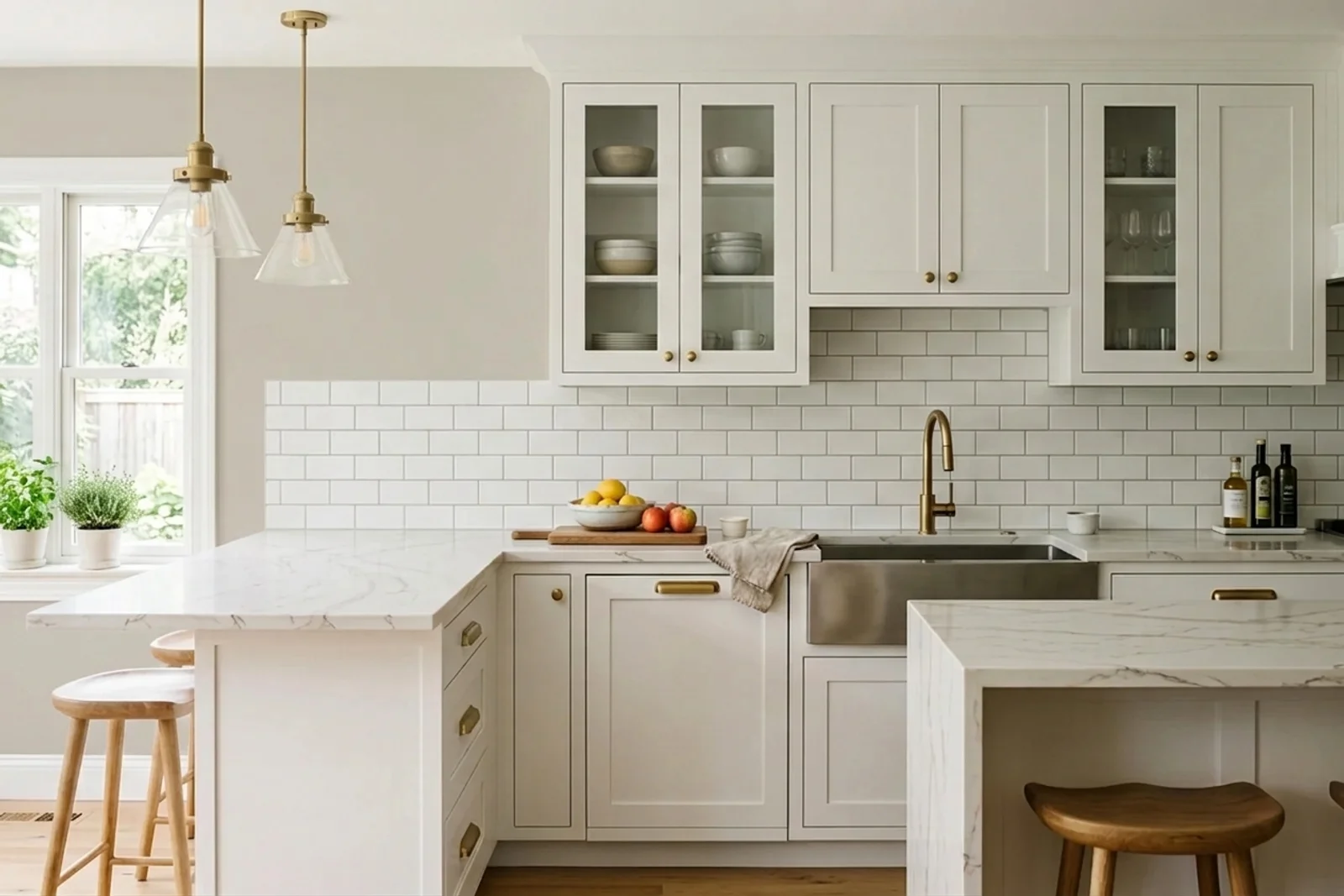
Revere Pewter works as a kitchen wall color behind white cabinets, where the wall color grounds the brightness of the cabinetry and prevents a flat, institutional read. It pairs beautifully with white marble-look quartz, aged brass hardware, and both white and natural wood cabinets. Use a washable matte or eggshell finish.
More kitchenpaint colors →AI-assisted visualization. Wall color digitally matched to Benjamin Moore Revere Pewter (HC-172).
Bathroom
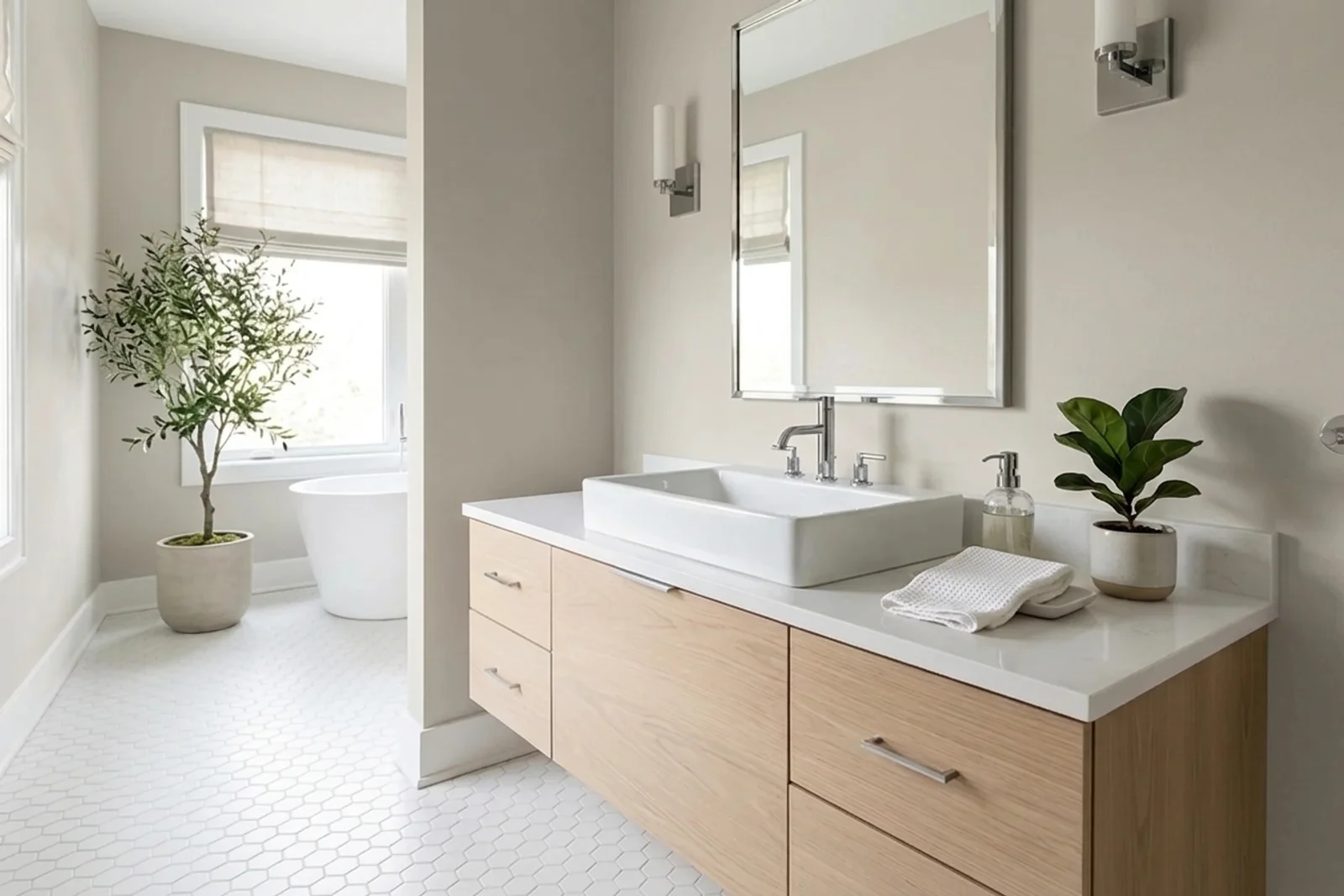
Revere Pewter in a bathroom delivers a spa-warm, slightly darker envelope than most neutrals — particularly effective in primary bathrooms with good natural light. It pairs with white subway tile, marble countertops, and brass or champagne bronze fixtures. In low-light powder rooms, sample carefully; the deeper LRV can compress the sense of space.
More bathroompaint colors →AI-assisted visualization. Wall color digitally matched to Benjamin Moore Revere Pewter (HC-172).
Dining Room
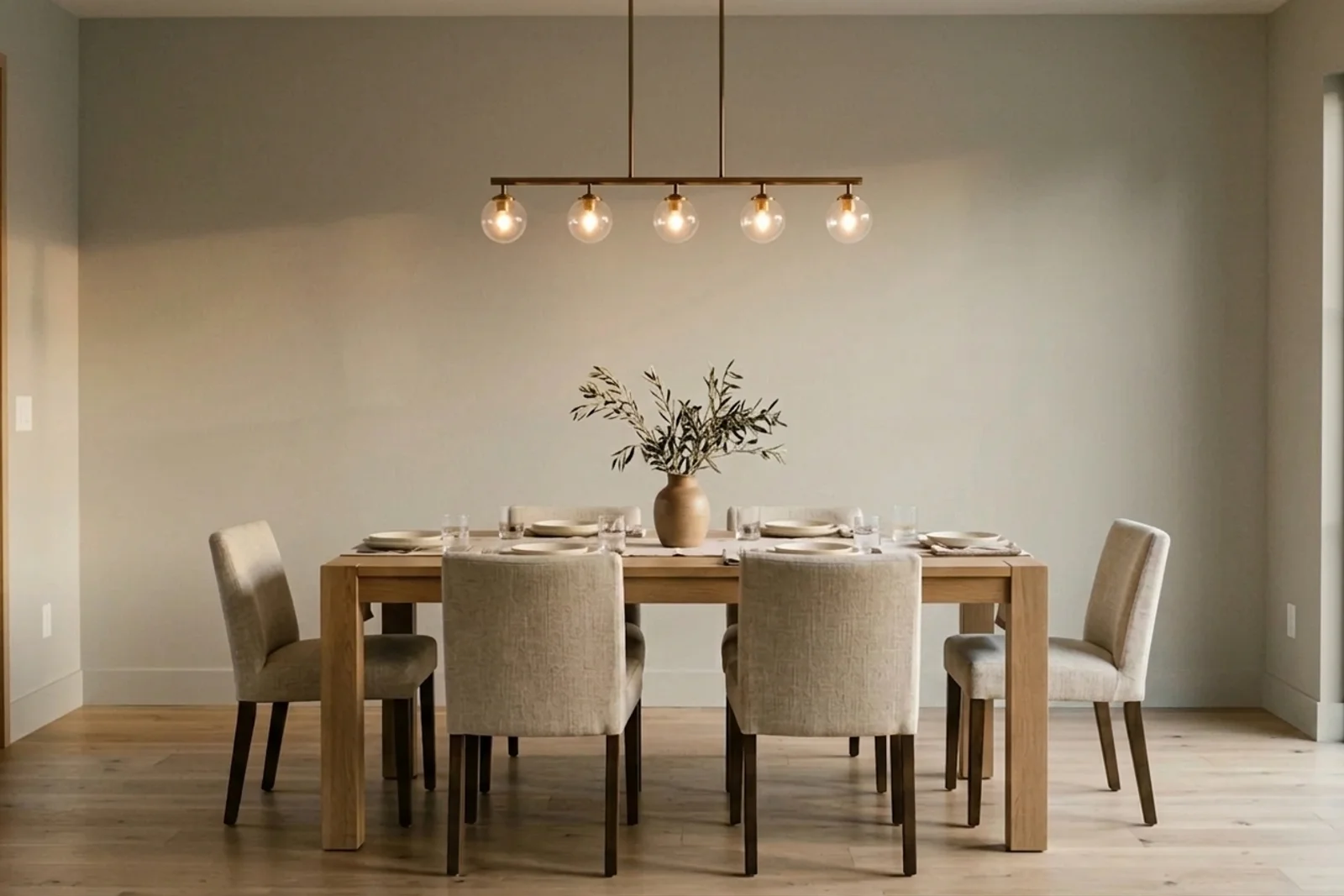
Revere Pewter in a dining room is nearly default-level classic. It creates a rich, warm envelope that flatters candlelight, dinner parties, and every common wood tone in dining furniture. Pair with a crisp warm white trim (White Dove, Simply White) and deeper accents (oil-rubbed bronze, charcoal upholstery) for a complete traditional look.
Natural walnut or cherry cabinetry with Revere Pewter walls
Material and Finish Pairings
White oak, walnut, and cherry flooring
Honed Carrara marble and quartzite
Aged brass, oil-rubbed bronze, and antique bronze hardware
Linen, wool, and natural-fiber rugs in warm neutrals
Revere Pewter Compared to Similar Colors
Revere Pewter is the richest and most distinctly taupe of the major warm greiges. Compared to Edgecomb Gray (HC-173, LRV 63), Revere Pewter is darker, warmer, and more saturated — Edgecomb is the lighter, softer cousin in the same Historical Collection. Against Sherwin-Williams Agreeable Gray (SW 7029, LRV 60), Revere Pewter reads deeper and more brown-leaning; Agreeable Gray is lighter and reads more cleanly as a greige. Compared to Repose Gray (SW 7015, LRV 58), Revere Pewter is noticeably warmer and carries a much more pronounced taupe undertone. Among dark greiges, Revere Pewter remains the benchmark for a warm, grounded neutral with character.
Revere Pewter (HC-172) has an LRV of approximately 55, which places it in the deeper end of the mid-tone neutral range. It reflects enough light to keep rooms feeling open in most lighting conditions but has enough depth to read as a committed color rather than a near-white. In rooms with very limited natural light, expect it to feel significantly darker than you'd anticipate from the swatch.
Is Revere Pewter warm or cool?
Revere Pewter is decidedly warm. Its taupe undertone is the most pronounced of the major warm greiges, which makes it a confident warm neutral rather than a balanced one. Pair it with warm wood, warm metals, and warm whites for harmony; avoid pairing with strongly cool marbles or cool grays, which will create an obvious temperature mismatch.
Is Revere Pewter going out of style?
Revere Pewter peaked in popularity around 2012–2018 as the defining transitional neutral of that era, and younger designers sometimes specify lighter or cooler alternatives today. But it remains an active bestseller and a perennial pick for traditional and transitional homes — it hasn't dated so much as become a committed style choice rather than the default. In the right setting it still looks beautiful.
What trim color goes with Revere Pewter?
White Dove (OC-17) is the most common trim pairing — both colors share a warm register and the contrast reads as intentional and timeless. Simply White (OC-117) is a slightly cleaner alternative. For a higher-contrast modern pairing, Chantilly Lace (OC-65) provides a crisp brightness against Revere Pewter's depth.
Revere Pewter vs. Edgecomb Gray?
Revere Pewter is darker, warmer, and more saturated; Edgecomb Gray is the lighter, softer version in the same family. Use Revere Pewter when you want a deeper, more committed greige with presence. Use Edgecomb Gray when you want the same warm character but in a lighter, more easygoing tone. Both are from the Benjamin Moore Historical Collection.
Design Tip
Revere Pewter's depth makes it sensitive to lighting. If you're considering it for a room with limited natural light, paint a large sample (minimum 2-by-3 feet) on the wall opposite the room's main light source and view it at the times you actually use the room — morning for a kitchen, evening for a living room, nighttime for a bedroom. In low-light rooms, Revere Pewter can read a full shade darker than expected. If that feels too heavy, step up to Edgecomb Gray (HC-173) for the same undertone at a lighter LRV.
Revere Pewter Mood and Style in the Home
The moods Revere Pewter most often produces, and the interior design styles it fits most naturally.
Moods
CozySophisticatedGrounding
Interior Design Styles
TraditionalTransitionalFarmhouse
Final Thought on Revere Pewter
Revere Pewter remains a defining neutral of American residential interiors because it gets something difficult right: it's a warm gray that reads as sophisticated rather than safe. Its taupe undertone gives it more character than the average beige or greige, and its lighting stability makes it more predictable than its cooler competitors. If you want a warm mid-tone neutral with real presence — one that anchors a room rather than disappearing behind the furniture — Revere Pewter remains one of the most reliable, best-tested choices in professional practice.